Clogged gutters can lead to water damage, so keeping them clean is key. The easiest way to clean gutters depends on your home: if you can reach the gutters safely from the ground or a short ladder, DIY methods with the right tools can work. Otherwise, hire a pro. This article covers common debris (leaves, needles, twigs, shingle grit, bird droppings), ladder and safety guidelines, ground-based vs. ladder-based methods, tool pros/cons (scoops, wands, blowers, vacuums, pressure washers, tongs, guards), troubleshooting tips (blocked downspouts, leaks), a maintenance schedule, and a decision flowchart to help you choose DIY or professional cleaning.
Why Keep Gutters Clean?
Gutters channel rain away from your roof, walls, and foundation. When they clog with debris, water can overflow at the roof edge, causing leaks, rotted fascia, foundation erosion, and even mold. In heavy rain, clogged gutters can spill water into landscaping or near your foundation. “Keeping your gutters clean is essential to protect your home” from water damage. Clogged gutters also attract pests and can damage shingles if overflow water soaks the roof edge.
Over time, gutters collect leaves, pine needles, twigs, dirt, shingle granules, seeds, and even bird nests or droppings. In fall you’ll find mostly broad leaves and acorns; in spring, pollen and dust accumulate; in pine regions, needles and cones can be a problem. This mix of organic debris is what makes cleaning necessary. As This Old House notes, gutters should be cleaned about twice a year (often in autumn and spring) in most climates, or more frequently if you live under trees. If you see standing water in the gutter or overflowing during rain, it’s a clear sign cleaning is needed.
Safety First: Ladder Guidelines
Safety is paramount. Falls from ladders and roofs cause serious injuries. Always assume cleaning gutters is a two-person job or hire a professional if there’s any doubt about safety. Doorstep HQ advises that “falls from ladders and roofs remain one of the leading causes of serious injury… gutter cleaning puts you in that zone on every single job”. Follow these rules:
- Use the Right Ladder and Angle: Use an extension ladder (not a stepladder) rated for at least 250–300 lb. Position it so its feet are stable and extend at least 3 feet above the gutter line. Follow the 4:1 rule: for every 4 feet of height, the base should be 1 foot from the wall.
- Ladder Extends 3ft: The ladder top should go 3 ft above the gutter line to grasp securely.
- Standoff/Bracket: Attach a ladder standoff or stabiliser to the top of the ladder. This device holds the ladder away from the gutter and wall, increasing stability and preventing damage to the gutter. A standoff shifts weight to the roof edge or siding instead of the gutter itself.
- Maintain Three-Point Contact: Always keep three points of contact (two hands + one foot, or two feet + one hand) on the ladder. Move slowly and deliberately.
- Don’t Overreach: Never lean so far that your belt buckle passes outside the rails. Never stand on the top two rungs (i.e. above the 3rd rung from top). If you can’t reach comfortably, climb down and reposition the ladder.
- Weather and Conditions: Only clean gutters in dry, stable conditions. Wet, windy, or icy weather makes ladders extremely dangerous.
- Protective Gear: Wear gloves, eye protection, and non-slip shoes. Falling debris or accidental splashes can injure you. Some sources also recommend a dust mask (if allergies are a concern) and hearing protection if using loud blowers.
- Have a Spotter: If possible, have someone hold or “foot” the ladder from below and call for help if needed. A second person can also hand you tools.
- Inspect Ladder and Area: Before climbing, inspect the ladder for damage. Place the ladder on a flat, firm surface (use plywood under feet on soft ground). Check overhead for power lines and ensure no electric hazards.
- Stay Off the Roof (if possible): Most cleaning can be done while standing on a ladder. This is safer than stepping onto a slippery roof. As This Old House notes, “Stay on the ladder. Falls are more likely if you work from the roof”. If a ladder alone can’t reach all areas, consider renting gutter cleaning tools or calling a professional.
If you feel unsafe on a ladder, don’t do it. For tall two-story homes or steep roofs (anything over ~20–24 feet of gutter height or a pitch steeper than 6/12), a professional is strongly recommended. Doorstep HQ advises treating any building above two stories or with no stable ground below as “a job that needs extra equipment, extra time, or extra hands”.
Tools Comparison
Choosing the right tool depends on your situation: the gutter height, type of debris (dry leaves vs. wet sludge), and whether you want to stay on the ground. Below is a comparison of common tools and gadgets for DIY gutter cleaning:
| Tool | Best For | Cost (approx) | Ease of Use | Safety | Limitations |
|---|---|---|---|---|---|
| Hand Gutter Scoop | Manually removing leaves, wet debris | $10–$20 | Easy (but ladder use) | Moderate (requires ladder) | Must lean into gutter; manual and slow |
| Gutter Cleaning Tongs/Grabbers | Grabbing small debris without putting hands in gutter | $15–$30 | Easy (ground use possible) | High (stay on ground) | Limited reach; only picks small bits |
| Telescoping Gutter Cleaning Wand (hose-fed) | Flushing out light debris and dirt; reaching 1–2 story gutters | $20–$100 | Moderate (requires water supply) | High (ground use) | Water pressure needed; reach ~10–15 ft |
| Leaf Blower Attachment (gutter nozzle) | Blowing out dry leaves, pine needles | $15–$50 (att) + blower $50–$250 | Moderate | Moderate (can stand ground) | Only works on dry debris; noisy; dusty |
| Wet/Dry Vacuum Attachment | Vacuuming wet leaves, sludge, and fine debris | $20–$100 (att) + shop vac $50+ | Harder (heavy gear) | Moderate (ground use) | Bulkier; limited by hose length; vac can clog |
| Pressure Washer Attachment | Cutting through stubborn residue and dirt | $20–$60 (att) + washer $80+ | Moderate | Low (high pressure risks) | Can damage gutters; difficult to control; ladder use is risky |
| Gutter Guards / Covers | Minimising debris entry (long-term solution) | $5–$25 per ft + installation | Easy after install | Very high (reduces climbing) | Still requires periodic cleaning above guards; cost to install |
Key tool notes: A simple gutter scoop (or even a trowel) is the classic approach for reachable gutters. It works well on wet or compacted debris but means working gutter-to-gutter on a ladder. The Gutter Tool (a popular scoop that attaches to an extension pole) lets you clear out debris from below shoulder height.
For homeowners who want to stay mostly on the ground, there are several attachments:
-
Telescoping Gutter-Wand: This is a water-fed pole (often 6–10 ft extension, up to ~15 ft reach) that hooks to a garden hose. It sprays water or has a rotating nozzle to flush out debris. It’s great for routine dirt, dust, and light buildup, and can reach most one- to two-story homes. The drawback is it depends on water pressure and doesn’t physically remove large chunks.
-
Leaf Blower Attachments: Leaf blowers can clear dry debris quickly. Specialised gutter attachments (like Worx Learjet or Milwaukee kits) direct the airflow into the gutter trough. Users report these work well on leaves and pine needles. However, they scatter debris off the house onto the yard (you must clean that up), and they’re useless on wet or matted debris. Also, using a blower while on a ladder can be awkward; these attachments are best on ground level.
-
Shop-Vac Vacuum Kits: Some shop vacuums can be adapted with long nozzle extensions (often 8–15 ft) for gutters. These are surprisingly effective on wet leaves, mud, and even sand: instead of pushing debris, you suck it out. Craftsman and other brands sell gutter vac kits. The downside is weight and bulk – you must manage the vacuum unit or hose on the ground. Also, very heavy debris may clog the hose.
-
Pressure Washer Gutter Nozzles: A pressure washer lance can blast out tough grime and fine sediment. In theory it saves time on really dirty gutters. In practice, experts caution it. Pressure washers deliver much force, which can easily dent or detach gutters if not used carefully. If you use one, choose a wide spray nozzle, keep the pressure low, and never aim upwards at seams. Gutter-Vac experts advise that pressure washers “can damage gutters, causing seams to split or even sections to detach”. Also, using a high-powered hose on a ladder is risky – the recoil can unbalance you. In general, don’t rely on a pressure washer unless you’re sure it’s safe for your gutters.
-
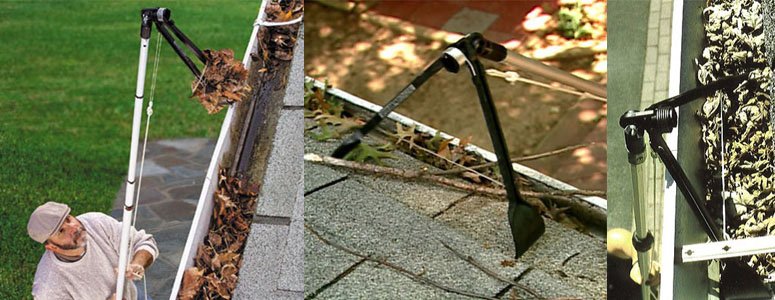
Gutter Cleaning Tongs/Grabbers: These look like large pincers on a pole. You open the tongs inside the gutter, grab a handful of debris, and remove it. They work well for leaf clumps and small pile-ups. Their advantage is they don’t scratch the gutter surface (unlike some metal scoops) and you can stay on the ground. The limitation is reach: on tall gutters, a pole may still be needed, and very fine debris will slip through.
-
Gutter Guards (Debris Covers): These aren’t cleaning tools, but they can reduce maintenance. Mesh screens or solid covers block large debris from entering the gutter. However, no guard is perfect – some debris will still accumulate on top of the cover or in gaps. Plan on cleaning out the guards themselves occasionally. Guards also make actual gutter cleaning harder when needed, because you must lift or remove the panels. We recommend guards only as a supplement, not a substitute for regular cleaning. (As This Old House warns, “no debris filter is perfect—you’ll still have to clean your gutters periodically”.)
Image suggestion: A homeowner on a step ladder scooping leaves out of a gutter, wearing gloves and safety glasses, or an illustration of gutter-cleaning tools (scoop, brush, ladder).
Step-by-Step DIY Gutter Cleaning
Ladder-Based Cleaning (Standard Method)
- Inspect and Prepare: Check the weather (dry, no wind). Lay tarps or a drop cloth under the gutters to catch debris. Wear gloves, eye protection, and sturdy shoes. Set up your extension ladder on firm, level ground. Attach any stabilisers or clamps. Ensure the ladder extends at least 3 feet above the gutter. Remember three-point contact and don’t climb above the third rung.
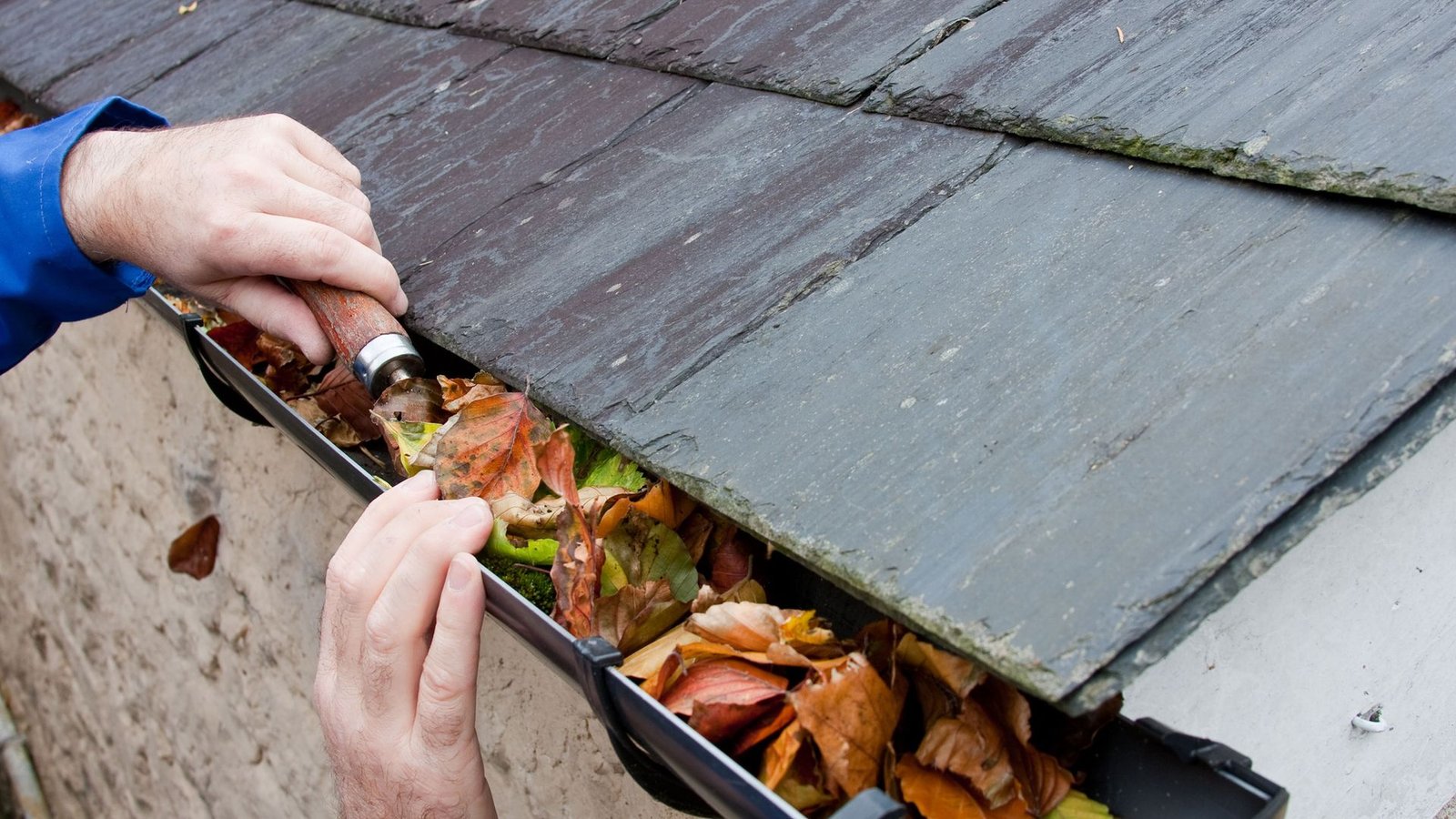
- Remove Large Debris: Starting at the far end from the downspout, use a gutter scoop or small trowel to lift out wet leaves, mud, and sticks. Pull debris toward you and drop it into a bucket or onto the tarp below. Alternatively, use gutters tongs or gloves to grab large clumps. Work in small sections (a few feet) so you’re always near a stable part of the ladder. Shake out shingle grit and smaller debris by hand if needed. Do not push debris into the downspout.
- Check and Clear Downspouts: After clearing the trough, make sure each downspout is open. You can remove the bottom of the downspout and clear it (carry a bucket down if clogged). Or use a pressure spray from your hose: Insert a high-pressure nozzle into the downspout and spray downward to flush out blockages. This Old House suggests spraying or even disassembling elbows if they’re jammed. If water backs up or exits with force from an elbow, clear any stubborn blockage.
- Flush the Gutters: Once large debris is out, attach a garden hose to a spray nozzle. Starting again at the end farthest from the downspout, flush the gutter with water towards the downspout. This rinses away fine dirt and reveals any leaks. Check that the water flows freely through the gutter and out the downspout. If you see overflow or pooling, there may still be a clog or a low spot.
- Inspect and Tidy Up: Look along the gutters as they dry. Tighten loose fasteners, replace missing hangers, and seal small leaks with gutter caulk. Straighten any sagging sections. Sweep up or hose down the area below; you don’t want debris clogging drains.
- Repeat Seasonal Maintenance: Plan to repeat this at least twice a year (usually spring and fall). Homes near pine trees or heavy dust may need more frequent checks.
Ground-Based Cleaning (No Ladder)
If your gutters are just out of reach (single-story home or small elevation), you can often clean them without climbing:
- Telescoping Hose Wand: Use a water-fed gutter wand (see Tools section). Attach it to your hose and raise the extendable pole to the gutter. Spray water to flush debris toward the downspout. For better results, after hosing, switch to a gentle hand-wand to rinse residue.
- Leaf Blower Attachment: With a gutter attachment on a blower, you can blow dry leaves and pine needles out. Start at the far end and blow toward the downspout. You may need to pull out bigger pieces by hand at the end.
- Shop-Vac Kit: Attach a long 2½″ hose kit to a wet/dry vac set on vacuum mode. Lift the curved nozzle into the gutter and vacuum out wet debris. This works well for sludge and dirty water.
- Gutter Tongs on a Pole: Buy extendable gutter tongs (they usually come with a pulley or rope). From the ground, lower the closed tongs into the gutter, then pull the cord to clamp them on debris. Lift and empty.
- Rotary Gutter Brush: A rotating scrub brush on a drill (gutter brush tool) can scrub stuck grime. After scrubbing, rinse with hose.
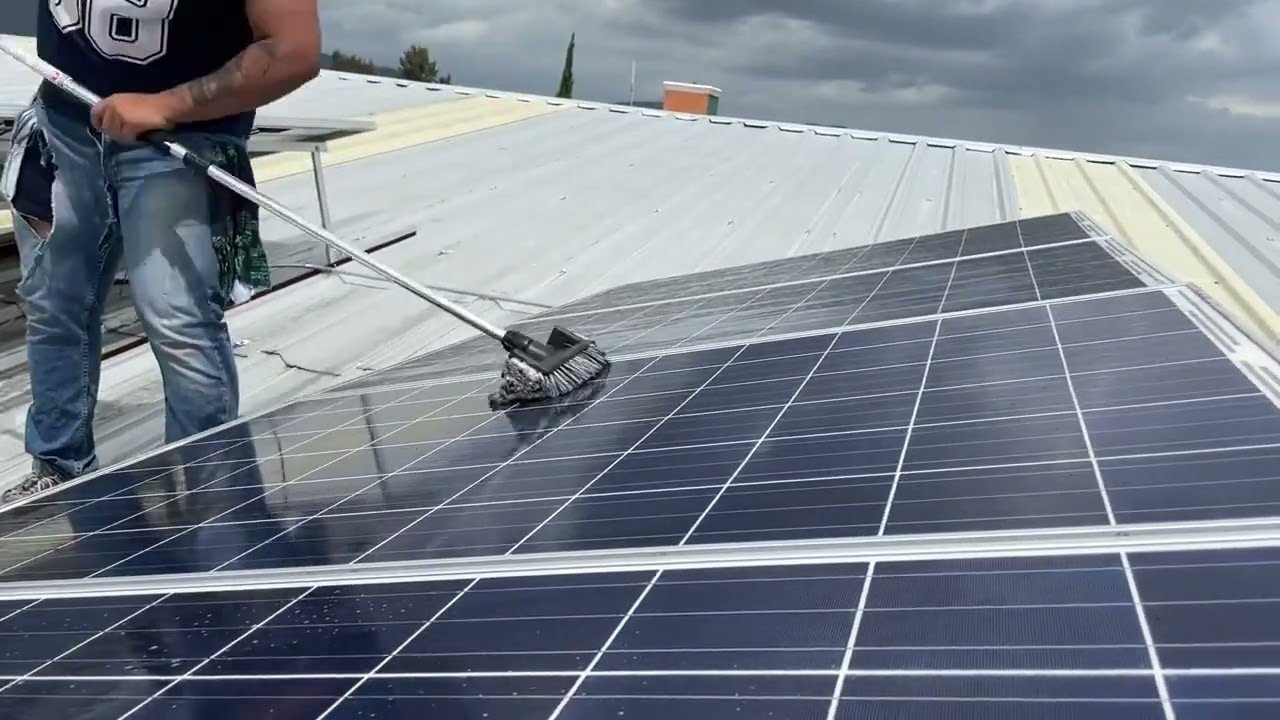
- Exterior Wipe-Down: To freshen gutters’ appearance, you can attach a lamb’s-wool mitt to a painter’s pole and wipe the outside of gutters (though this doesn’t clear inside debris).
Ground-based cleaning keeps you safer by avoiding the ladder, but it typically takes longer because debris has to fall or be vacuumed into a basin. You’ll get wet and muddy, so use covering cloths and maybe a shop-vac to clean up on the ground.
When you use ground methods, still check your downspouts by flushing them. Often you can tell if a downspout is clear when the gutter above it empties out. If not, you may need a short ladder or steps to fix that.
Troubleshooting Common Problems
- Stubborn Clogs in Downspouts: If water still won’t flow through a downspout, try inserting a broom handle or plumber’s snake from the top or bottom. You can also detach an elbow (they often are riveted but can be drilled out) to free the obstruction. After clearing, reattach with sheet-metal screws.
- Stagnant Water: Small dips or sagging in gutters cause pooling. Tighten or replace hangers so gutters slope properly toward downspouts. Pro tip: as This Old House suggests, having slightly larger downspouts (e.g. 4-inch round or 3×4 rectangular) helps avoid overflow.
- Leaks or Damage: While cleaning, inspect for holes, separations, or rust. Small holes can be sealed from the inside with gutter sealant after the gutter dries. Otherwise, note where sections might need repair or replacement.
- Gutter Guards: If you have guards, remove any debris that has piled up on top of them. Guards can make cleaning easier in the long run by keeping out big debris, but they still require maintenance. The screens themselves and any leaves on top of them need clearing. Remember, “no debris filter is perfect — you’ll still have to clean your gutters periodically”.
- Pests or Nests: Birds, squirrels, and insects sometimes nest in gutters or downspouts. Remove nests carefully (with gloves) and sanitise if needed. Consider installing mesh at downspout bottoms to keep critters out.
How Often to Clean Your Gutters
There’s no one-size-fits-all schedule. A good rule is at least twice a year: typically in spring and fall. Clean in spring to remove winter debris and in fall after most leaves have fallen.
Adjust frequency based on your circumstances. If your house is under leafy trees or in a very dusty area, quarterly checks might be wise. If you get heavy winds, consider a quick look after storms. Always inspect gutters and downspouts regularly; it’s easier to catch a problem early than after damage has occurred.
Decision Time: DIY or Hire a Pro?
If your home is single-story or has railings and spots where a ladder can safely rest, a careful homeowner can likely clean the gutters themselves. But there are situations where professional help is safer and more cost-effective. The flowchart below can guide you:
flowchart TD
    A[Need Gutter Cleaning] --> B{Height / Roof Steepness?}
    B -- >24 ft tall or >2 stories, or very steep --> C[Hire Professional]
    B -- Safe single story / low pitch --> D[Consider DIY]
    D --> E{Comfort and Equipment?}
    E -- Uncomfortable on ladder OR lacking tools --> C
    E -- Safe and equipped --> F[DIY with Proper Tools]
    C --> G[Benefits of Professional:\nSaves time and risk, thorough cleaning\n(especially for multi-story or high debris)}
    F --> H[Benefits of DIY:\nLower cost, flexible scheduling,\nuse appropriate safety gear]
Choose a pro if: Your gutters are too high or unsafe to reach (two or more stories, steep roof, no flat ground for ladder), the debris is extreme (e.g. rotted roof or pine straw), or you simply don’t have the tools or skills. Professionals have specialised vacuum systems and brushes for tough jobs, and they carry insurance.
DIY may be fine if: Your gutters are low enough, your roof isn’t slippery, and you’re comfortable with a ladder. Even then, follow safety rules strictly.
Safety Checklist
Before you start any DIY gutter cleaning, run through this checklist:
- Weather OK? (>Dry, no strong wind or rain.)
- Ladder Inspection: Ladder in good condition, rated weight >= your weight + tools.
- Secure Placement: Ladder levelled and footed. Use stabiliser/standoff as needed.
- Extension: Ladder extended ~3 feet above gutter line.
- 3-Point Contact: Always maintain 3 points of contact on ladder.
- Personal Gear: Sturdy shoes, non-slip gloves, eye protection. Hearing protection if using loud blower.
- Clear Area Below: Keep kids/pets/others away. Lay down a tarp for debris.
- Tool Organisation: Have a bucket or bag attached to ladder for debris; don’t carry heavy items while climbing.
- Power Lines: Ensure no overhead electrical lines near the ladder area.
- Buddy System: Have someone nearby to spot or call for help if needed.
- Plan Ahead: Know where you’ll put the ladder to clean every section without moving too frequently.
Never attempt to clean gutters if your setup violates any safety rule. If in doubt, hire a professional.
Comparing the Tools
Below is a quick-reference table summarising the best uses and drawbacks of each tool mentioned above:
| Tool | Best For | Price (approx) | Ease of Use | Safety Level | Limitations |
|---|---|---|---|---|---|
| Gutter Scoop | Wet leaves, mud, hand clearing | $10–$20 | Easy (requires ladder) | Moderate (ladder use) | Slow; labor-intensive |
| Gutter Tongs/Grabber | Small clumps, staying off ladder | $15–$30 | Easy (ground or low use) | High (no ladder) | Limited reach; messy if heavy debris |
| Telescoping Hose Wand | Flushing light debris, low dirt | $20–$100 | Moderate (ground, needs hose) | High (ground use) | Water pressure needed; limited length |
| Leaf Blower Attachment | Dry leaves, needles | $15–$50 (att), + blower $50–$250 | Moderate (ground) | Moderate (ground) | Noisy; blows debris everywhere; not for wet debris |
| Wet/Dry Vac Attachment | Wet leaves, sludge, fine dust | $20–$100 (att), + vac $50+ | Hard (bulky) | Moderate (ground) | Heavy equipment; vac hose can clog |
| Pressure Washer Attachment | Stubborn dirt, final rinse | $20–$60 (att), + washer $100+ | Moderate (caution) | Low (risky) | Can damage gutters; requires care |
| Gutter Guards/Covers | Reduce debris entry | $5–$25/ft installed | Easy (once on) | Very high (no cleaning needed) | Doesn’t stop all debris; still needs cleaning above or inside guards |
Each tool has a place: for example, a hand scoop is cheap and effective for one-story homes but useless on a two-story. A telescoping wand is great for homeowners with hose access but won’t pry out heavy clogs. Read the label and manual for any tool you use.
When to Call a Professional
Hire a pro if any of these are true:
- Height: Your gutters are more than one story high or roof pitch >30°. (Even pros often won’t climb very steep roofs without safety lines.)
- Access Issues: No safe place for a ladder (e.g. dense landscaping, pool, steep slope below).
- Time/Convenience: If you’re short on time or physical ability, a pro can do it much faster.
- Major Debris: Gutters filled with heavy mud, nesting birds, or years of decay buildup.
- System Problems: You suspect major leaks or need gutter repair/replacement – pros can inspect.
- Safety Concerns: If you’ve had trouble balancing on a ladder before, skip it.
Professionals can also clean your gutters and downspouts with specialised vacuum trucks or extended reach tools, and they can manage big jobs (commercial buildings, long runs) that are impractical for DIY.
Example: If your two-story house needs cleaning twice a year, a professional service in the U.S. might charge $100–$250 per visit (depending on region, gutters length, and difficulty). DIY, you might spend about $50–$150 on tools (ladder, scoop, attachments) but you invest your time and risk.
Remember: a preventive gutter cleaning can be much cheaper than repairing water damage later.
DIY Gutter Cleaning Checklist
- Weather Check: Dry day, no wind, no forecast rain.
- Prep Area: Lay tarp, remove obstructions, keep tools handy.
- Set Up Ladder: Secure on flat ground; attach stabiliser or levellers; check angle.
- Gear Up: Gloves, safety glasses, dust mask (if allergic), long-sleeve shirt.
- Tools Ready: Scoop or attachments; bucket or bag; garden hose with nozzle.
- 3-Point Contact: Maintain on ladder at all times.
- Work Smart: Clean a little, then move ladder – don’t overreach.
- Flush and Test: Rinse after scooping to ensure flow through downspout.
- Inspect As You Go: Look for damage, leaks, or loose hangers.
- Clean Up: Remove debris from tarp, check yard drains, store tools safely.