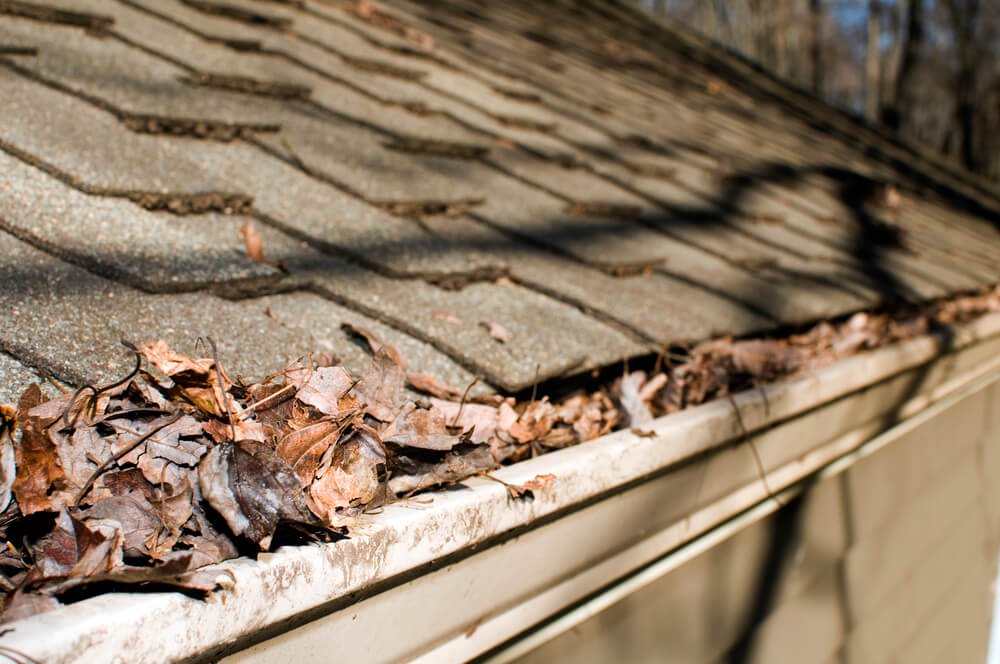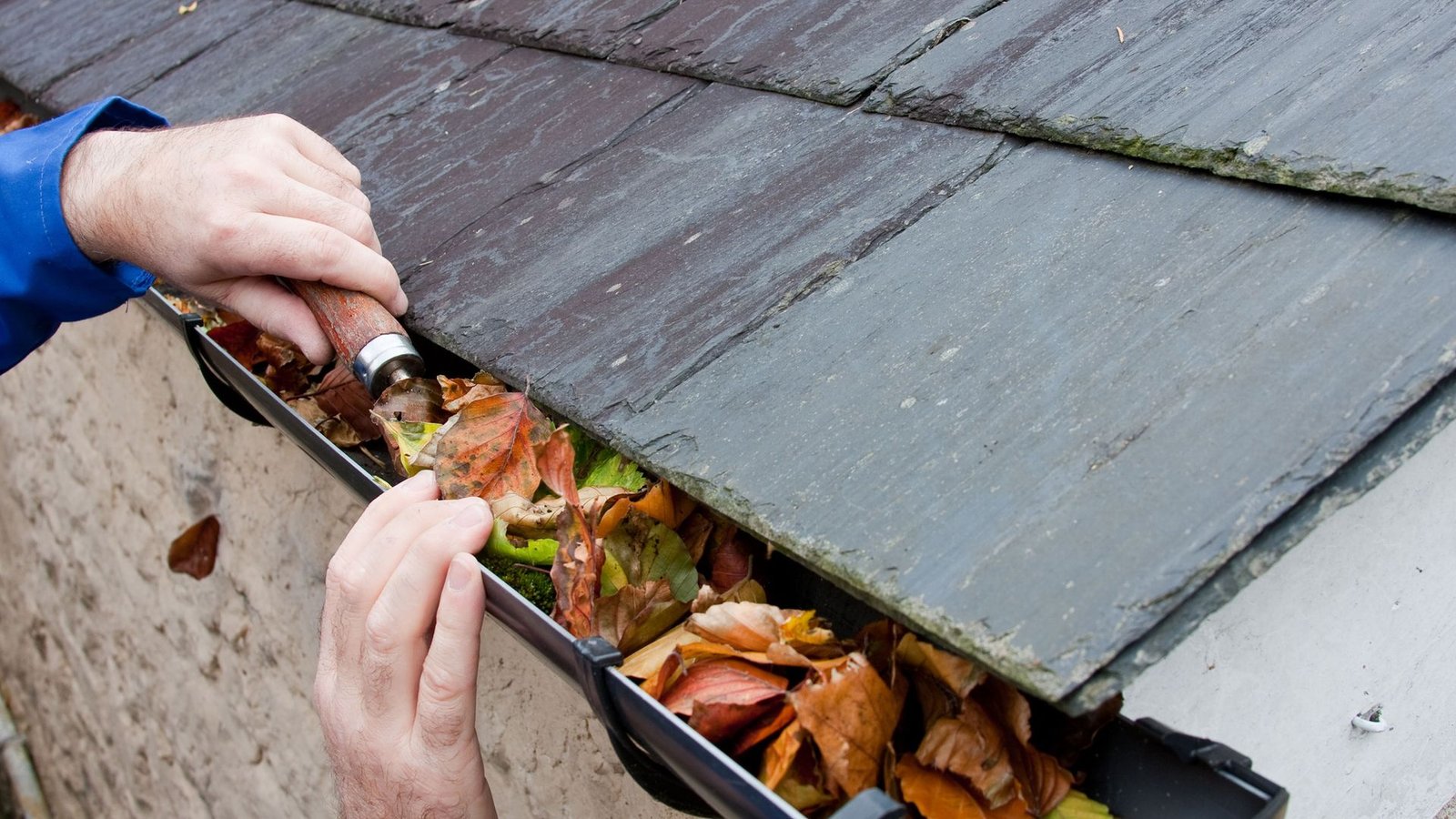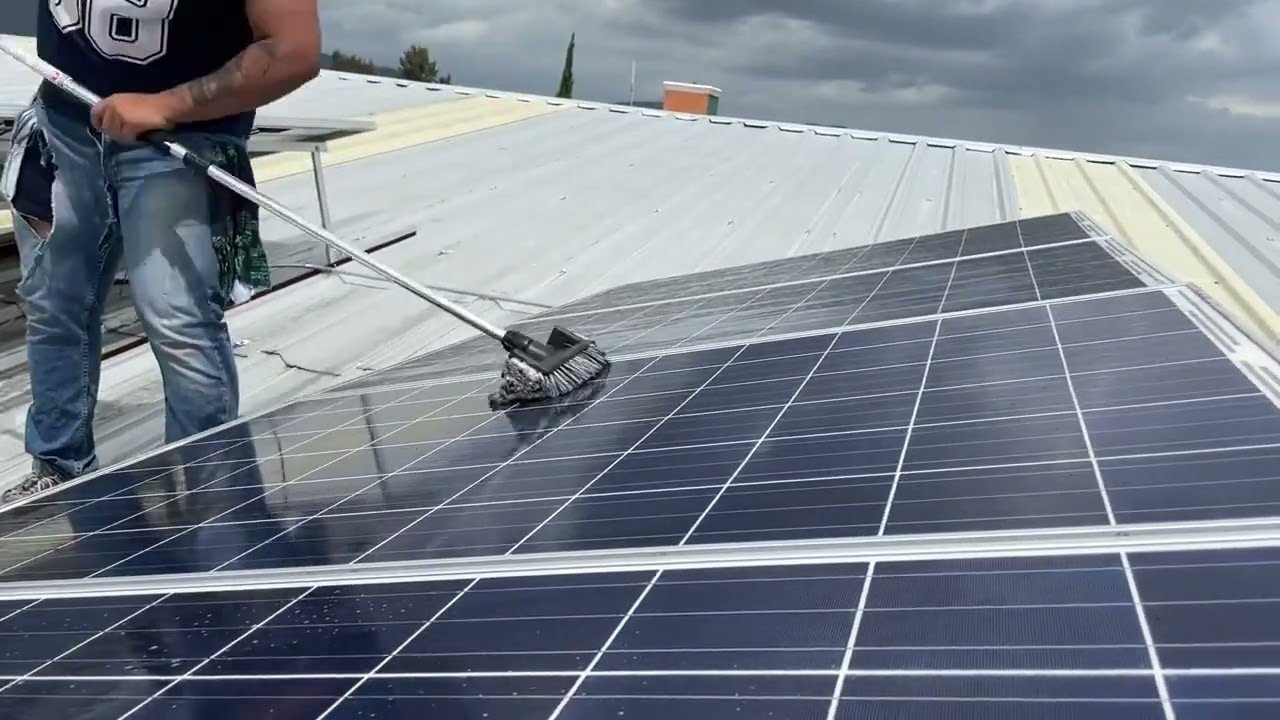
Solar panels spend their lives outdoors, collecting sunlight while also collecting whatever the environment throws at them: dust, pollen, bird droppings, leaves, airborne pollution, and sometimes hard-water residue.
Eventually, many homeowners reach the same question:
What is the best solution for cleaning solar panels?
For most residential systems, the answer is simpler than you might expect. You generally want a gentle cleaning method that removes surface contamination without scratching the glass, leaving residue behind, or violating the panel manufacturer’s maintenance instructions.
In many cases, plain water is enough for loose dirt. For more persistent buildup, manufacturers may allow a mild soap or detergent, while NREL’s solar operations and maintenance guidance generally points toward plain water and mild soap while avoiding hard brushes and abrasives.
But the “best” solution depends on what is actually dirtying your panels.
Dust requires a different approach from bird droppings. Pollen may behave differently from mineral deposits. And a panel on a one-story garage is a very different cleaning project from a large rooftop array that requires working at height.
This guide explains what homeowners should know before reaching for a bucket, hose, or bottle of cleaner.
What Is the Best Solution for Cleaning Solar Panels?
For routine residential cleaning, clean water and a soft, non-abrasivecleaning toolare often the safest starting point, provided that approach is consistent with your solar panel manufacturer’s instructions.
If water alone doesn’t remove the contamination, a manufacturer-approved mild soap or cleaning solution may be appropriate.
The basic principle is:
Use the least aggressive cleaning method that effectively removes the contamination.
That means you don’t need a powerful chemical cleaner simply because a panel looks dirty.
You also don’t want to scrub harder just because the first pass didn’t remove everything.
Solar modules can have surface coatings and glass that need to be treated carefully. NREL’s best-practice guidance specifically recommends following the PV module manufacturer’s cleaning instructions and avoiding hard brushes and abrasive materials.
A practical hierarchy looks like this:
Light dust:
Clean water and gentle rinsing may be sufficient.
Loose dirt and pollen:
Water followed by gentle cleaning with an appropriate soft tool may work.
Bird droppings or stuck-on residue:
Soak and soften the material rather than aggressively scrubbing it.
Mineral or hard-water deposits:
A more specialized approach may be necessary, but check the manufacturer’s instructions before applying any chemical.
Heavy or difficult-to-access contamination:
Professional solar panel cleaning may be the safer option.
Why Do Solar Panels Need Cleaning?
Solar panels are designed to operate outdoors, so some dirt is expected.
The problem occurs when enough material accumulates to interfere with the sunlight reaching the photovoltaic cells.
NREL refers to this buildup as soiling. Common sources include agricultural dust, construction dust, pollen, bird droppings, soot, and industrial particles.
The effect isn’t identical everywhere.
A homeowner living in a relatively clean environment with regular rainfall may see little benefit from frequent cleaning. Someone near construction, agriculture, busy roads, trees, or heavy bird activity may have a completely different experience.
That’s why there isn’t a universal rule saying every solar panel should be cleaned every month.
Does Cleaning Solar Panels Actually Improve Energy Production?
It can, particularly when significant soiling has accumulated.
Solar panel soiling can reduce the amount of light reaching the photovoltaic cells. NREL research has found that the impact can vary substantially depending on environmental conditions.
A particularly useful example comes from NREL research into pollen accumulation in North Carolina.
Researchers found that peak pollen-season performance reductions reached as much as 15% at the studied utility-scale sites. After mechanical wet-brush cleaning, measured performance increased by roughly 5% to 11%.
That does not mean every homeowner will recover 5%, 10%, or 15% after cleaning.
The result depends on how dirty the system is, what is causing the soiling, local weather, panel orientation, and other factors.
So be skeptical of anyone promising a guaranteed percentage increase in solar production simply because your panels were cleaned.
What Is the Best Thing to Clean Solar Panels With?
1. Clean Water
For ordinary dust and loose dirt, water is often the simplest place to start.
A gentle rinse can remove loose particles without introducing chemicals or residue.
However, water quality matters.
If your local water contains significant dissolved minerals, allowing it to dry on glass can leave spots or mineral deposits. If this is a recurring issue, a professional cleaner may use purified or demineralized water to reduce residue.
The exact water and cleaning procedure should still follow the panel manufacturer’s instructions.
2. Demineralized or Purified Water
Professionals sometimes use demineralized water because it contains fewer dissolved minerals that can remain on the glass after drying.
This can be particularly useful when homeowners are concerned about water spots.
It isn’t necessarily something every homeowner needs to purchase for occasional cleaning, but it can be useful for professional cleaning systems.
The important distinction is that cleaning the panel and leaving a mineral film behind aren’t the same thing.
If you repeatedly rinse panels with hard water and allow them to air-dry, you may eventually notice white spotting or residue.
3. Mild Soap or Manufacturer-Approved Detergent
If plain water doesn’t remove stubborn contamination, some manufacturers permit a mild soap or detergent.
NREL’s operations and maintenance guidance notes that manufacturers generally include cleaning instructions and commonly recommend plain water and mild soap while avoiding hard brushes and abrasives.
But don’t assume your everyday household cleaner is automatically suitable.
Before using soap:
- Check the solar panel manufacturer’s instructions.
- Use only the recommended concentration.
- Avoid abrasive formulations.
- Don’t leave a thick film on the glass.
- Rinse thoroughly if the instructions require it.
The goal is to remove contamination, not replace dirt with a layer of cleaner residue.
Can You Use Dish Soap to Clean Solar Panels?
This is one of the most common homeowner questions.
The safest answer is:
Only use it if your panel manufacturer permits it or specifies a compatible mild detergent.
Different solar modules can have different surface treatments, coatings, and warranty requirements.
Instead of assuming that a kitchen dish soap is harmless, check your module documentation first.
If the manufacturer recommends plain water, there’s little reason to introduce soap for ordinary dust.
What About Glass Cleaner?
Household glass cleaner might make a window sparkle, but that doesn’t automatically make it appropriate for solar panels.
Solar panels are not simply ordinary windows with electricity-producing cells underneath.
They may have specialized glass surfaces or coatings, and the manufacturer may specify particular cleaning methods.
Unless your manufacturer’s instructions specifically approve a glass cleaner, plain water or an approved cleaning solution is the safer choice.
Can You Use Vinegar to Clean Solar Panels?
You’ll find plenty of DIY recommendations online suggesting vinegar for mineral deposits and other stains.
The problem is that homemade cleaning recipes don’t automatically account for the specific surface treatment of your solar modules.
If you are considering vinegar, acidic cleaners, or another household chemical, check the manufacturer’s instructions first.
If the manufacturer doesn’t recommend it, don’t assume that “natural” means “safe for the panel.”
What Should You Never Use on Solar Panels?
The cleaning method can matter as much as the cleaning product.
Avoid improvising with aggressive materials.
Abrasive Brushes
A stiff or abrasive brush can scratch the surface.
NREL guidance specifically recommends avoiding hard brushes and abrasives.
Steel Wool or Scouring Pads
These have no place on a solar panel.
The surface isn’t a dirty cooking pan.
Harsh Chemicals
Strong solvents, aggressive detergents, or unapproved chemicals can potentially damage surfaces or coatings.
High-Pressure Water
More pressure doesn’t automatically mean better cleaning.
NREL’s best-practice material advises against high-pressure water and abrasive cleaning approaches.
Dirty Cleaning Tools
Even a soft brush can cause problems if it has trapped sand or grit in its fibers.
A tool that is supposed to clean the panel can become a source of scratching if it is contaminated with abrasive particles.
How to Clean Solar Panels Safely
Once you’ve confirmed the manufacturer’s cleaning instructions, the process can be relatively straightforward.
Step 1: Choose the Right Time
Avoid working on extremely hot panels whenever possible.
Early morning or later in the day may be more comfortable and can reduce the challenge of water evaporating rapidly.
The roof itself can also become extremely hot.
Step 2: Inspect the Panels
Before touching anything, look for:
- Heavy dust
- Pollen
- Bird droppings
- Leaves
- Tree debris
- Sticky residue
- Mineral deposits
- Cracked glass
- Visible damage
If you see cracked or damaged panels, don’t turn the cleaning project into a repair attempt.
Step 3: Remove Loose Debris
Clear leaves and larger debris carefully.
Don’t drag gritty material across the glass.
Step 4: Rinse With Clean Water
Use a gentle flow to loosen surface dirt.
Let water do some of the work before introducing any cleaning tool.
Step 5: Gently Clean Stubborn Areas
If your manufacturer’s instructions permit contact cleaning, use an appropriate soft, non-abrasive tool.
Don’t scrub aggressively.
If a bird dropping doesn’t come off immediately, let it soften rather than attacking it with force.
Step 6: Rinse Thoroughly
Remove any remaining dirt or approved cleaning solution.
Step 7: Check the Finished Surface
Look for:
- Streaks
- Mineral spots
- Remaining bird droppings
- Soap residue
- Areas that were missed
The panel should be clean without leaving a film behind.
How Do You Remove Bird Droppings From Solar Panels?
Bird droppings are more challenging than ordinary dust because they can adhere strongly to the surface.
The worst approach is usually aggressive dry scrubbing.
Instead:
- Wet the affected area.
- Allow the material to soften.
- Gently remove it using an appropriate soft tool.
- Rinse thoroughly.
- Repeat if necessary rather than increasing force.
Bird droppings can also create localized shading, which is one reason NREL identifies bird-related soiling as a maintenance concern.
If birds regularly roost beneath or around the array, cleaning alone may not solve the underlying problem.
You may need to address the source of the bird activity as well.
How Do You Remove Hard-Water Spots From Solar Panels?
Hard-water spots occur when dissolved minerals remain after water evaporates.
If you already have mineral deposits, simply adding more hard water may not solve the problem.
Before applying vinegar, acid, commercial glass cleaner, or another chemical, check the panel manufacturer’s cleaning instructions.
For recurring hard-water problems, professional cleaning using appropriate purified-water equipment may be a better approach.
This is especially useful when the homeowner’s goal is not simply to remove dirt, but to clean the glass without leaving another layer of residue behind.
Does Rain Clean Solar Panels?
Rain helps, but it isn’t a complete cleaning strategy.
NREL research found that rainfall can remove some contamination, but it may not be enough to restore panels affected by pollen or other persistent soiling. In one study, researchers found that rainfall did not return panels to their previous cleaned performance levels after pollen accumulation.
NREL has also documented how dust can become more difficult to remove after repeated exposure to moisture and dew, a process researchers describe as cementation.
So:
Rain can help. Rain does not guarantee that your panels are clean.
How Often Should Solar Panels Be Cleaned?
There isn’t one correct schedule for every American homeowner.
Your cleaning frequency should depend on your local environment and the rate at which your panels become soiled.
You may need more frequent attention if your property is near:
- Construction
- Agricultural activity
- Dusty roads
- Large trees
- Heavy bird activity
- Industrial sources
- Areas with significant pollen
NREL recommends considering local soiling conditions when establishing a cleaning regimen rather than blindly following a universal schedule.
A condition-based approach can make more sense:
Inspect → monitor production → identify significant soiling → clean when the expected benefit justifies it.
How Can You Tell if Your Solar Panels Need Cleaning?
Don’t rely entirely on whether the panels look slightly dusty.
Instead, consider several signals together.
Visible buildup
If you can clearly see a layer of dirt, pollen, bird droppings, or other contamination, cleaning may be worth considering.
Production changes
Look at your solar monitoring data.
If production is consistently lower than expected, investigate the cause.
Environmental conditions
Think about what has happened around your property.
Was there a long dry period?
Heavy pollen?
Nearby construction?
Wildfire smoke or airborne debris?
A lot of bird activity?
These conditions can increase soiling.
Important: Don’t blame every production problem on dirt
Low solar output can also be caused by:
- Shade
- Inverter problems
- Electrical faults
- Equipment failures
- Weather
- System degradation
Cleaning won’t repair a failed inverter.
Should You Clean Solar Panels Yourself?
Sometimes.
For a ground-accessible array or a system that can be cleaned safely without climbing onto a roof, DIY cleaning may be reasonable.
But roof access changes the equation.
If cleaning requires you to:
- Climb onto a steep roof
- Work near roof edges
- Handle long poles from an unstable position
- Move around electrical equipment
- Reach difficult sections
then the safety risk may outweigh the money saved.
A clean solar panel isn’t worth a fall.
DIY vs. Professional Solar Panel Cleaning
| DIY Cleaning | Professional Cleaning |
| Lower direct cost | Higher upfront cost |
| Suitable for accessible systems | Useful for difficult-to-reach arrays |
| Requires your own time | Saves homeowner time |
| You choose the cleaning method | Professionals bring appropriate equipment |
| Greater responsibility for safety | Reduced need for homeowner roof access |
| Best for simple maintenance | Useful for heavy or persistent soiling |
The right choice depends on the property.
A homeowner with a small, accessible installation may have no reason to hire someone every time.
A large rooftop array with difficult access is another story.
What Is the Best Solution for Cleaning Solar Panels in the U.S.?
There isn’t one cleaning product that is best for every American home.
Climate and surroundings matter.
A homeowner in a dry, dusty region may deal primarily with dust and mineral residue. Someone surrounded by pine or oak trees may deal with pollen. A property near construction may accumulate fine dust. A home with heavy bird activity may have localized contamination.
That’s why condition-based solar panel maintenance is more useful than blindly following a fixed cleaning schedule.
NREL’s research makes this point particularly well: soiling losses depend heavily on local conditions, and even areas with frequent rain can experience persistent contamination.
A Simple Solar Panel Cleaning Checklist
Before cleaning:
☐ Check the manufacturer’s instructions
☐ Inspect the panels for damage
☐ Identify what is causing the buildup
☐ Choose a safe time and method
☐ Decide whether the panels can be reached safely
During cleaning:
☐ Remove loose debris carefully
☐ Start with clean water when appropriate
☐ Use only manufacturer-approved cleaning solutions
☐ Use soft, non-abrasive tools
☐ Avoid aggressive scrubbing
☐ Avoid high-pressure cleaning
After cleaning:
☐ Rinse thoroughly
☐ Check for residue or mineral spots
☐ Confirm the panels look clean
☐ Monitor system production over time
When Should You Call a Professional Solar Panel Cleaner?
Professional cleaning makes particular sense when the panels are difficult to reach, heavily soiled, or when you simply don’t feel comfortable performing rooftop maintenance.
It’s also useful when you’re dealing with persistent contamination such as heavy pollen, bird droppings, or mineral residue and don’t want to experiment with household cleaning products.
For homeowners in Southern California, professional solar panel cleaning can also be useful after extended dry periods or when environmental debris has accumulated on the array.
The objective isn’t to clean the panels simply because they’re outside.
It’s to remove meaningful soiling safely and maintain the system without creating damage in the process.
Final Answer: What Is the Best Solution for Cleaning Solar Panels?
For most homeowners, the best approach is gentle, manufacturer-approved cleaning rather than a powerful chemical or aggressive scrubbing method.
Start with clean water for loose dirt. If additional cleaning is necessary, use only a mild, manufacturer-approved solution and a soft, non-abrasive cleaning tool. For mineral deposits or persistent contamination, consider professional cleaning rather than experimenting with harsh household chemicals.
Most importantly, don’t assume that every dirty-looking panel needs the same treatment.
The best solar panel cleaning solution is the one that removes the specific contamination effectively while protecting the panel surface, following the manufacturer’s instructions, and keeping the person doing the cleaning safe.
That’s a much better rule than simply searching for the strongest cleaner.
Frequently Asked Questions
What is the best thing to clean solar panels with?
Clean water and a soft, non-abrasive cleaning tool are a sensible starting point for many systems. If additional cleaning is needed, follow the manufacturer’s instructions regarding mild soap or approved cleaning solutions.
Can I use soap and water to clean solar panels?
Some manufacturers allow mild soap or detergent, but you should check your specific panel manufacturer’s instructions first. Don’t assume every household soap is suitable.
Can I use a pressure washer on solar panels?
High-pressure cleaning is generally not recommended in NREL’s best-practice guidance. Excessive pressure can create unnecessary risk to panel surfaces and components.
Does rain clean solar panels?
Rain can remove some loose contamination, but it doesn’t necessarily remove persistent pollen, dust, or other soiling. NREL research has shown that rainfall was insufficient to fully restore performance in pollen-affected systems.
How often should solar panels be cleaned?
There is no universal schedule. Cleaning frequency should depend on local soiling conditions, including dust, pollen, construction activity, birds, trees, and rainfall.
Can dirty solar panels produce less electricity?
Yes. Soiling can reduce the amount of sunlight reaching photovoltaic cells and therefore reduce energy output. The size of the loss varies by location and contamination.
Is professional solar panel cleaning worth it?
It can be, particularly when panels are heavily soiled, difficult to access, or unsafe for the homeowner to reach. The decision should consider the level of soiling, expected performance benefit, cleaning cost, and safety.