Cleaning your gutters yourself can save money, but the wrong tool can turn a simple maintenance job into a messy, frustrating, or unsafe afternoon.
The good news is that you don’t need a garage full of specialised equipment. The best DIY gutter cleaning tools depend mainly on three things: how high your gutters are, what kind of debris is inside them, and whether you want to work from the ground or use a ladder.
A lightweight gutter scoop may be perfect for a single-story home packed with dry leaves. A telescoping gutter cleaning wand can make more sense when you want to stay on the ground. A wet/dry vacuum can be useful for heavier sludge, while a leaf blower attachment is particularly handy for loose, dry debris. Recent homeowner guides and tool comparisons consistently group these options among the most useful DIY gutter-cleaning tools.
The trick is choosing the right tool for the actual problem, rather than buying whichever gutter cleaner happens to have the loudest marketing.
What Should You Look for in a Gutter Cleaning Tool?
Before choosing a tool, look at your gutters from the ground and ask four simple questions:
How high are they?
A tool that works beautifully on a one-story ranch may be awkward on a two-story home.
What’s clogging them?
Dry leaves, pine needles, wet sludge, bird nests, and packed sediment don’t respond equally well to the same cleaning method.
Can you reach the gutter safely?
Ground-based tools can reduce the need for ladder work, but they don’t magically make every gutter accessible.
Do you need to remove debris or just flush the gutter?
A hose can rinse away fine residue, but it isn’t necessarily the best first tool for a gutter packed with leaves and mud.
These questions narrow the field surprisingly quickly.
The 7 Most Useful DIY Gutter Cleaning Tools
1. Gutter Scoop: Best for Hands-On Cleaning
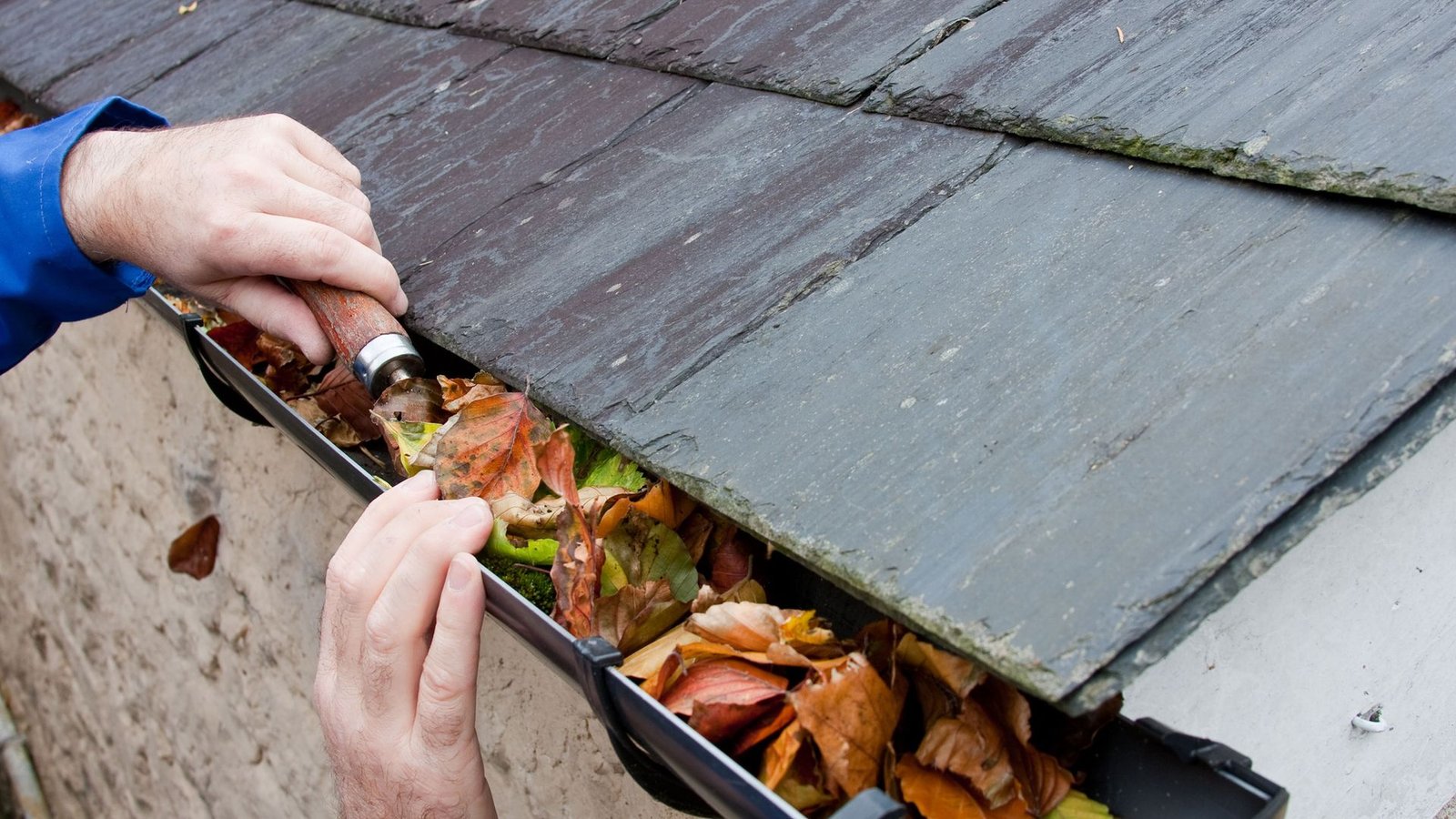
A gutter scoop is one of the simplest and most useful tools for removing leaves, pine needles, and accumulated debris.
It looks almost like a small shovel designed to fit inside a gutter channel.
Best for:
- Dry leaves
- Pine needles
- Dirt
- Loose roof grit
- Thick layers of debris
- Gutters that haven’t been cleaned in a while
How to use a gutter scoop
First, position your ladder safely if ladder access is appropriate for your home. Wear gloves and eye protection.
Place the scoop into the gutter and pull debris toward you rather than forcing it deeper into the downspout. Drop the material into a bucket or onto a tarp below.
Work in small sections.
Once the visible debris is removed, flush the gutter with a hose to clear remaining fine material and check whether water reaches the downspout normally.
A gutter scoop is inexpensive and effective, but its biggest limitation is obvious: you have to get close to the gutter. Current tool roundups continue to recommend dedicated scoops for straightforward manual cleaning.
Important tip
Choose a scoop made to fit the approximate shape of your gutter. A bulky tool that constantly catches on the gutter edge will make the job harder, not easier.
2. Telescoping Gutter Cleaning Wand: Best for Cleaning From the Ground
For homeowners who want to avoid climbing as much as possible, a telescoping gutter cleaning wand is one of the most practical choices.
These tools typically combine a long extension pole with a curved nozzle, brush, scoop, or water-fed head. Some connect to a garden hose and allow you to direct water into the gutter from ground level. Ground-based telescoping tools are widely recommended for homeowners looking to reduce ladder use.
Best for:
- Single-story homes
- Some two-story applications
- Light to moderate debris
- Routine maintenance
- Homeowners who prefer ground-level cleaning
How to use it
Extend the pole only as much as needed.
Position the attachment over the gutter and work slowly along the channel. With a water-fed model, start with a controlled flow rather than blasting water at full force.
Work from one end toward the downspout, moving debris in a direction that helps you keep track of where it’s going.
Afterwards, run water through the gutter and watch the downspout discharge.
What it can’t do
A telescoping wand isn’t a universal solution.
If your gutter is packed with heavy, wet, compacted debris, a water-fed wand may move only the surface while leaving the stubborn material underneath.
That’s the point at which a different tool, or professional cleaning, may be more appropriate.
3. Leaf Blower With Gutter Attachment: Best for Dry Leaves
Already own a leaf blower?
A gutter cleaning attachment can turn it into a useful DIY tool for clearing loose leaves and lightweight debris.
A number of current gutter-cleaning guides recommend blower attachments specifically for dry material. They’re fast and particularly convenient during leaf season.
Best for:
- Dry leaves
- Small twigs
- Pine needles
- Loose debris
- Routine seasonal cleanup
How to use it
Attach the gutter-cleaning extension according to the manufacturer’s instructions.
Start at the end of the gutter farthest from the downspout.
Use controlled airflow to move loose debris toward the discharge point or out of the gutter, depending on the attachment design.
Wear eye protection because gutter debris tends to have an impressive ability to travel much farther than expected.
Don’t use a leaf blower for everything
A blower is excellent against dry, loose debris.
It’s much less impressive against:
- Wet leaves
- Mud
- Compacted organic matter
- Heavy sediment
- Stubborn clogs
That’s not a failure of the blower. It’s simply the wrong tool for that type of mess.
A current gutter-care guide similarly notes that leaf blower attachments are best suited to loose dry debris and are less effective on wet, compacted blockages.
4. Wet/Dry Vacuum With Gutter Attachment: Best for Wet Debris
A wet/dry shop vacuum with a gutter cleaning extension is another popular choice, especially when debris is too wet or heavy for a blower.
The advantage is straightforward:
Instead of blasting debris away, you suck it up.
Best for:
- Wet leaves
- Sludge
- Heavy debris
- Fine sediment
- Ground-level cleaning where access allows
How to use it
Connect the gutter-cleaning extension to a wet/dry vacuum designed to handle the material you’re removing.
Start near one end and guide the nozzle through the gutter in manageable sections.
Keep an eye on the vacuum tank. Wet debris takes up space quickly, and a clogged nozzle can dramatically reduce suction.
Vacuum the debris first, then use a controlled rinse to check the channel and downspout.
Vacuum-extension systems are commonly recommended as a ground-based option, particularly for material that is too wet for a blower.
One drawback
A proper gutter vacuum setup can cost considerably more than a basic scoop or hose attachment.
For a homeowner who cleans gutters once a year, purchasing a full system may not make economic sense.
5. Garden Hose With Gutter Cleaning Attachment: Best for Rinsing and Light Debris
A gutter cleaning hose attachment is one of the simplest options when your gutters contain mostly loose material and you mainly need to flush them.
Curved hose wands and gutter-flush attachments are commonly used for ground-level cleaning.
Best for:
- Light debris
- Dust
- Fine sediment
- Final rinsing
- Routine maintenance
How to use it
Once larger debris has been removed, direct the water along the gutter channel.
Work toward the downspout and watch for normal flow.
Don’t simply flood the gutter and assume it’s clear.
The real test is whether water travels through the entire system and exits the downspout without backing up.
When a hose isn’t enough
If you can see a thick mat of wet leaves, don’t expect a spray of water to solve everything.
Remove the bulk material first with a scoop, vacuum, or another appropriate tool.
6. Pressure Washer Gutter Attachment: Powerful, But Use With Care
A pressure washer gutter cleaning attachment can remove stubborn dirt and sediment quickly, which explains its popularity.
However, pressure washers deserve a more cautious approach than a regular hose.
Recent guidance emphasises that a pressure washer should be treated as a cleaning and rinsing tool rather than something to blast indiscriminately into the gutter. Excessive pressure or poor nozzle positioning can damage older or delicate gutter components.
Best for:
- Stubborn dirt
- Heavy surface buildup
- Rinsing after bulk debris removal
- Gutters that need more force than a garden hose provides
How to use it more safely
Use an attachment intended for gutter cleaning.
Start with lower pressure and increase only when necessary, staying within the pressure washer and gutter manufacturer’s recommendations.
Keep the spray controlled and pay attention to:
- Gutter seams
- End caps
- Downspout connections
- Older aluminum
- Vinyl components
- Painted surfaces
Never assume that more pressure equals a better clean.
It can just as easily equal a damaged gutter.
7. Gutter Cleaning Tongs or Grabber Tool: Best for Targeted Cleaning
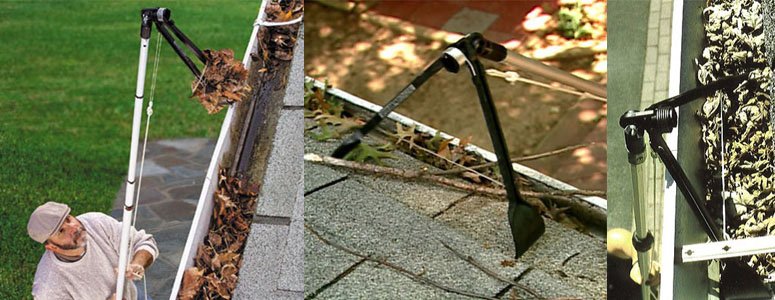
A gutter grabber or gutter-cleaning tong can be useful when you need to pick out leaves and debris without putting your hand directly into the gutter.
Some models attach to extension poles, allowing you to reach difficult areas from the ground. Current gutter-cleaning tool guides include grabber-style tools among practical options for homeowners.
Best for:
- Leaves
- Small clumps
- Targeted debris removal
- Reaching awkward sections
- Ground-level spot cleaning
How to use it
Extend the tool to the required height and close the grabber around the debris.
Remove small amounts at a time rather than trying to pull an enormous clump in one motion.
If the material is tightly packed, forcing the tool can be less effective than switching to a scoop or vacuum.
Which DIY Gutter Cleaning Tool Is Best for You?
Here’s the simplest way to choose.
| Your situation | Best starting tool |
| Dry leaves | Leaf blower attachment |
| Wet leaves | Wet/dry gutter vacuum |
| Thick debris | Gutter scoop |
| Light debris | Telescoping water wand |
| Ground-level maintenance | Telescoping gutter cleaner |
| Fine dirt and final rinse | Garden hose attachment |
| Stubborn buildup | Carefully used pressure washer attachment |
| Small, targeted debris | Gutter tongs/grabber |
| Very high or difficult roof | Consider professional cleaning |
The key is matching the tool to the job rather than asking, “What is the best gutter cleaning tool?”
There isn’t one.
There is only the tool that is best for your particular gutter, debris, reach, and comfort level.
How to Clean Gutters Using DIY Tools
Once you’ve selected your equipment, the actual process is fairly straightforward.
Step 1: Check the weather
Choose a dry, stable day.
Wet roofs, slippery surfaces, and unpredictable weather make an already elevated maintenance task more difficult.
Step 2: Inspect the gutters first
Look for:
- Overflow stains
- Sagging sections
- Visible plants
- Standing water
- Heavy debris
- Damaged seams
- Loose brackets
- Blocked downspouts
If the gutter is visibly damaged, cleaning alone may not solve the underlying problem.
Step 3: Remove large debris first
Use a scoop, grabber, or vacuum.
Don’t immediately start with water when the gutter is packed with leaves and sludge.
Step 4: Clear the downspouts
A clean gutter with a blocked downspout is still a drainage problem.
Use an appropriate hose, attachment, or carefully controlled method to verify that water can travel through the downspout.
Step 5: Flush the gutter
Once bulk debris is gone, rinse the gutter and observe the water flow.
Look for water that:
- Pools
- Backs up
- Spills over the front edge
- Escapes around joints
These signs may indicate a blockage or drainage problem.
Step 6: Inspect the results
Don’t judge the job by how clean the gutter looks.
Judge it by whether water moves where it is supposed to go.
That is the real purpose of gutter cleaning.
What About Gutter Guards?
A common assumption is:
“I have gutter guards, so I don’t need to clean my gutters.”
That’s not always true.
Leaves and debris can accumulate on top of guards, while fine material can enter through openings. Gutters and downspouts may still need inspection and maintenance.
Better Homes & Gardens notes that even homes with gutter guards should still have their gutters inspected and maintained periodically.
If you have gutter screens or covers, choose tools that won’t bend, dislodge, or damage them.
A stiff metal scraper isn’t automatically better just because it is tougher.
Safety Matters More Than the Tool
This is the part DIY articles sometimes rush past.
Cleaning a gutter is relatively simple.
Falling from a roof or ladder is not.
Ground-based cleaning tools can reduce the amount of ladder work required, which is one reason they have become popular. But a long pole does not make every situation safe or manageable.
Avoid DIY cleaning when:
- The roof is steep
- Gutters are unusually high
- The surface is wet or icy
- You cannot maintain stable footing
- The ladder cannot be positioned securely
- Electrical hazards are nearby
- You are uncomfortable working at height
- Gutters are badly damaged
If reaching the gutter safely is the hardest part of the job, that may be your answer.
You don’t need a better gadget.
You may need professional help.
Don’t Make These DIY Gutter Cleaning Mistakes
Cleaning only what you can see
A gutter can look clear near the middle while the downspout remains blocked.
Always test the entire drainage path.
Blasting everything with maximum pressure
High pressure can damage components and force debris into places you don’t want it.
Use the minimum effective pressure.
Using a leaf blower on wet sludge
It usually produces noise, flying muck, and disappointment.
Switch tools.
Ignoring gutter damage
If the gutter is sagging or separating at the seams, cleaning may reveal a repair problem rather than solve it.
Forgetting the area below the gutter
Protect landscaping and clean up the debris after the job.
A gutter-cleaning session shouldn’t end with your driveway looking like a leaf graveyard.
When Is Professional Gutter Cleaning the Better Choice?
DIY gutter cleaning makes sense for many accessible homes.
But there is a point where buying more tools simply delays the obvious.
Professional gutter cleaning can be the better option when the roof is high, access is difficult, debris is heavily compacted, or the gutters need a more thorough inspection.
A professional can also identify problems that aren’t obvious from ground level, including:
- Loose fasteners
- Sagging gutters
- Separation at joints
- Damaged sections
- Persistent drainage problems
- Downspout blockages
For homeowners in Norco, California, All American Cleaning provides professional gutter cleaning for residential and commercial properties, helping remove accumulated debris and keep rainwater moving through the drainage system properly.
The goal isn’t merely a cleaner-looking gutter.
It’s a gutter that can do its job when the next heavy rain arrives.
Final Thoughts
Choosing the right DIY gutter cleaning tools doesn’t require buying every gadget on the shelf.
Start with the problem.
If you’re dealing with dry leaves, a leaf blower attachment may be the quickest solution. For wet debris, a wet/dry vacuum may be more practical. A gutter scoop remains one of the simplest tools for hands-on cleaning, while telescoping wands and grabbers can help reduce the amount of ladder work required. Pressure washer attachments can handle tougher buildup, but they need more careful handling.
And remember the most useful rule of all:
The best gutter cleaning tool is the one that clears the debris effectively without creating a bigger problem.
For an accessible one-story gutter, DIY may be perfectly reasonable.
For a high, awkward, heavily clogged, or unsafe gutter, professional cleaning can be the smarter investment.
A clean gutter isn’t about winning a battle against leaves.
It’s about making sure the next rainstorm has somewhere to go.